Does a granny flat need building consent?
Not if it is new, on its own, one storey and ≤ 70 m², and every condition is met.
- Building Act 2004

A schedule of its own, and a section that sets its process.
Schedule 1A of the Building Act describes a small stand-alone dwelling and how it must be built. Section 42B makes it exempt from a building consent, on conditions: a project information memorandum first, licensed trades, and records to the council after.
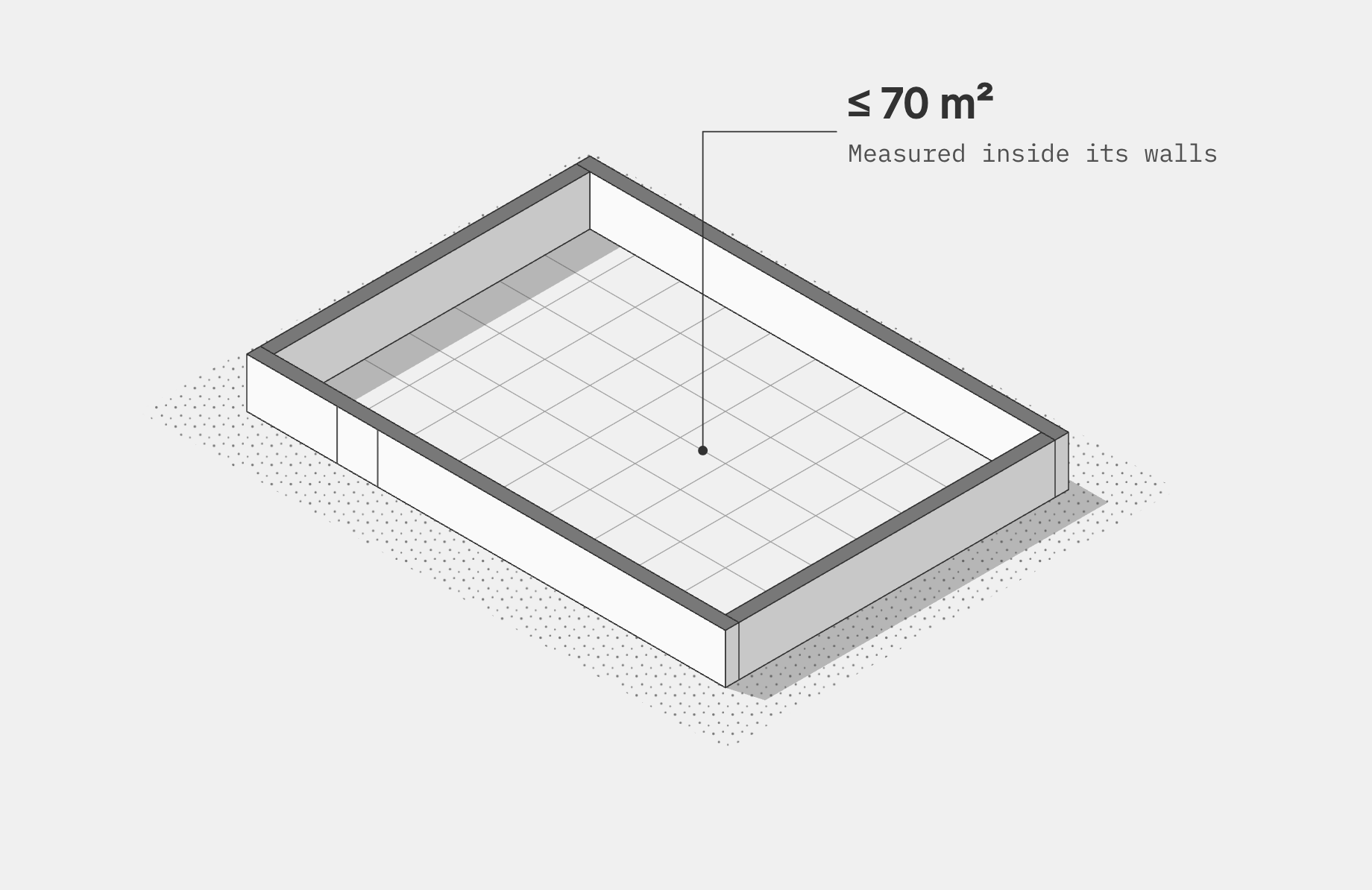
Floor area is inside the walls, not over them.
Schedule 1A measures floor area by the overall inside dimensions between the finished internal faces of the external walls. A garage with a door inside is allowed, within the same limit.
Building Act 2004 Schedule 1A clauses 1(c), 2(4), 3
Every condition, or a building consent.
Its plumbing and drains follow E1, G12 and G13's acceptable solutions, ≤ 30 fixture units, the main drain ≥ DN100 at 1:60, and connect to the public network where there is one. MBIE: if any condition stops being met, the work is no longer exempt and needs a consent.
Building Act 2004 Schedule 1A clauses 1, 2 · MBIE, granny flats exemption guidance
The PIM gives site information. It is not an approval.
MBIE: the build must be finished within 2 years of the PIM unless it is extended, and development contributions may be due. Not sending the records is an infringement offence with a fine of ≤ $1,000.
Building Act 2004 s 42B · MBIE, granny flats exemption guidance and step-by-step guides
A different process, not a lesser one.
The council does not inspect exempt work or issue a code compliance certificate: the owner and the licensed professionals answer for it. MBIE asks owners to check the district plan and the national standard for minor residential units early.
Building Act 2004 ss 14B, 42B · MBIE, understanding the granny flats exemption
Key takeaways
- New, stand-alone, one storey, ≤ 70 m² inside its walls, and every Schedule 1A condition met: no consent.
- A PIM before work starts, licensed trades during it, and the records to the council ≤ 20 working days after.
- The council does not inspect it or issue a code compliance certificate. The owner answers for it.